Trezor Login: A Complete 1200-Word Guide to Accessing Your Hardware Wallet Securely
Logging into your Trezor wallet is one of the most important steps in managing and securing your cryptocurrency. The Trezor ecosystem is designed around safety, simplicity, and complete user control, so the login process works differently from signing into a traditional online account. Instead of a username and password, Trezor relies on its hardware device, a recovery seed, and optional security layers like a PIN and passphrase. This structure ensures that only the device owner can access or approve account actions.
This comprehensive guide explains how Trezor login works, the steps to sign in using your device, what to expect during the process, common troubleshooting methods, and best practices for keeping your crypto safe.
1. What Trezor Login Really Means
When people talk about “Trezor login,” it can refer to several related actions:
• Accessing your Trezor Suite account
Trezor Suite is the software interface used to manage your coins. Instead of entering online credentials, you connect your Trezor device to the app. Only the physical hardware wallet can unlock account functions, which eliminates risks tied to stolen passwords or hacked websites.
• Unlocking your hardware wallet
Before you can view balances, send crypto, or make changes, you must enter your device PIN. This is part of the login process because it confirms physical ownership.
• Using optional passphrase protection
A passphrase acts as an extra security layer that creates a hidden wallet. If you enabled this feature, entering the passphrase becomes part of the login experience.
• Authorizing actions
Even after logging in, you must approve sensitive operations like transactions, firmware updates, and recovery actions directly on the device.
Understanding this structure helps you recognize why Trezor is considered one of the safest ways to store digital assets.
2. Requirements for Trezor Login
Before beginning, ensure you have:
• Your Trezor hardware wallet (Model One or Model T)
The device is essential. Without it, you cannot log into or access your wallet.
• Trezor Suite installed
You can use the desktop app or, if necessary, the web-based version within Trezor Suite. It acts as the interface for your crypto management.
• A USB cable
Used to connect your hardware wallet to your laptop or desktop.
• Your device PIN
You assigned this when setting up your wallet. It prevents unauthorized physical access.
• Optional passphrase (if enabled)
This is NOT the same as the PIN. If you created a passphrase, you will need it to access the associated hidden wallet.
With these items ready, you can start the login process.
3. Step-by-Step Guide to Trezor Login
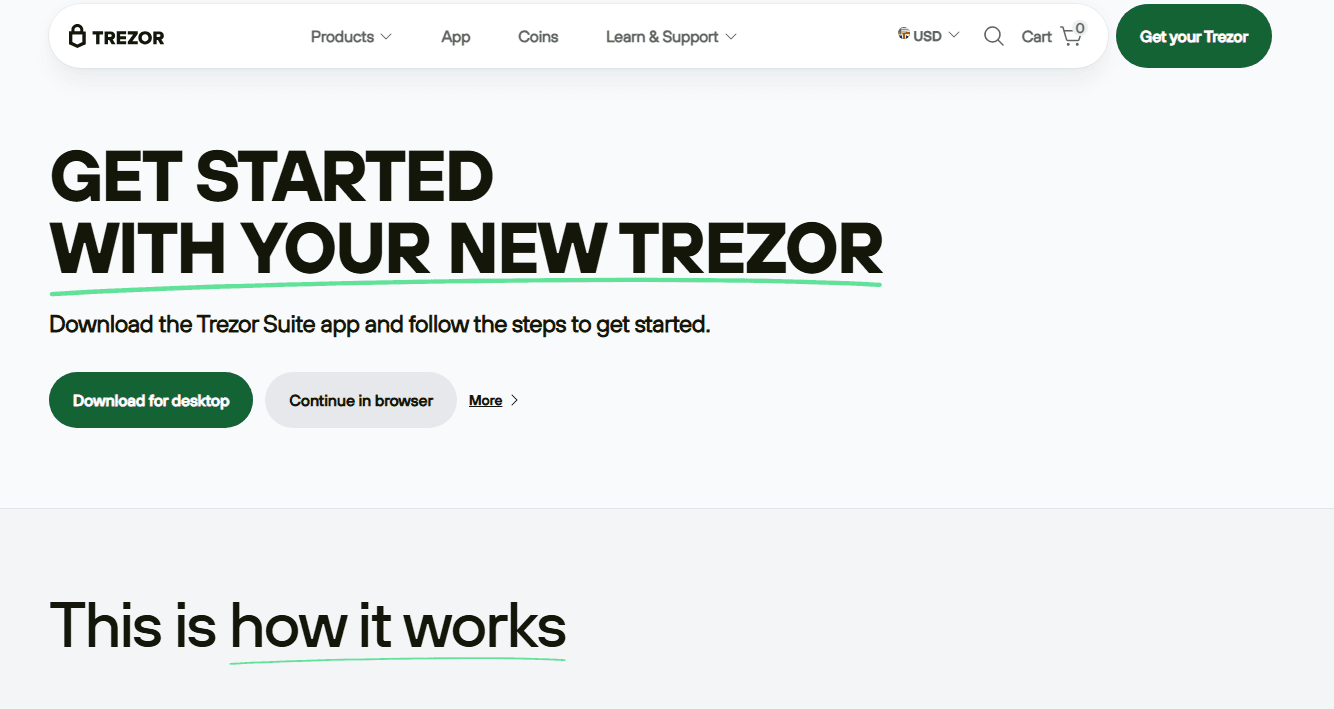
Step 1: Open Trezor Suite
Launch the Trezor Suite application on your computer. If you are using it for the first time, you may be prompted to choose between the standard and advanced mode. Either one works for logging in.
Step 2: Connect Your Trezor Device
Plug your Trezor wallet into your computer using a reliable USB cable. The screen on your device should turn on immediately.
If this is your first time connecting the device to the computer, you may need to install security drivers. Trezor Suite will guide you through that.
Step 3: Confirm Connection
Trezor Suite detects your device and displays a prompt to "Connect" or "Get Started." Select the option to proceed.
If your device has outdated firmware, Suite may require you to update it before continuing. Always verify update messages directly on the device screen.
Step 4: Enter Your PIN
Your device screen will display a scrambled numeric keypad. In the Trezor Suite window, you will see a blank PIN layout. Enter the PIN by matching the position of the numbers shown on your device screen.
This randomized keypad prevents malware from capturing your PIN through key-logging.
Step 5: Approve Login
After entering your PIN, confirm the action on your device. The device will then authenticate with Trezor Suite, allowing you to proceed.
Step 6: Enter Passphrase (If Enabled)
If you added a passphrase during setup, Trezor Suite will ask you to type it. You may choose whether to enter it on the computer or directly on the device, depending on your model and preference.
Once accepted, Trezor loads the hidden wallet associated with that passphrase.
Step 7: Access Your Dashboard
After successful authentication, you will be redirected to the Trezor Suite dashboard. From here, you can:
View balances
Manage accounts
Send and receive crypto
Install or manage coins
Update security settings
Review transaction history
This completes the Trezor login process.
4. Security Features Behind Trezor Login
Trezor’s login system is built to protect users from online attacks, physical theft, and unauthorized access. Some of the key protections include:
• PIN protection
Incorrect attempts lead to increasing delays, making brute-force attacks nearly impossible.
• Physical confirmation
Transactions must be approved on the device itself, preventing remote hackers from sending funds without your consent.
• Isolated hardware environment
Private keys never leave the device, even during login.
• Passphrase protection
A passphrase creates unlimited hidden wallets, each functioning independently.
• Recovery seed
If the device is lost, stolen, or damaged, the recovery seed restores access.
Together, these layers create a login system that is secure even in the face of advanced cyber threats.
5. Common Trezor Login Issues and How to Fix Them
1. Device Not Recognized
Possible solutions:
Try a different USB cable
Use another USB port
Restart Trezor Suite
Reboot your computer
2. Incorrect PIN
If you enter the wrong PIN, the waiting time increases. Double-check the keypad scramble and try again carefully.
3. Forgot Passphrase
Passphrases cannot be recovered. If forgotten, you can still restore the device using your recovery seed, but this will only access your standard wallet, not the hidden one tied to the lost passphrase.
4. Firmware Update Required
Sometimes Suite will block login until you update. Follow on-screen instructions carefully and always verify details on the device.
5. Stuck on Loading Screen
Restart both Trezor Suite and the device. This usually resolves temporary communication issues.
6. Best Practices for a Safe Trezor Login Experience
• Never share your PIN, passphrase, or recovery seed
No support team will ever ask for these details.
• Always verify actions on the device screen
This ensures no one is remotely altering your instructions.
• Use a secure and private computer
Avoid logging in on shared or public systems.
• Keep your device firmware updated
New updates often improve security and overall performance.
• Store your recovery seed offline
Preferably on paper or metal backup plates in a private location.
• Enable passphrase protection if needed
This adds an extra layer of security against theft.
• Avoid downloading unofficial software
Only use Trezor Suite to manage your crypto.
7. Why Trezor Login Is Different from Regular Logins
Most digital accounts rely on passwords stored on a server. Trezor eliminates this risk by keeping everything offline and fully in your control. The login process revolves around verified physical access, cryptographic security, and user-initiated approval.
You are not logging into a website — you’re unlocking a device that holds your private keys. This offline-first design is one of the main reasons Trezor remains a top choice for long-term crypto storage.
Conclusion
Trezor login is a secure, simple, and highly reliable process built around the principles of hardware-based authentication and zero-trust philosophy. Whether you’re accessing your portfolio, sending crypto, or adjusting security settings, the login experience ensures that only you maintain control over your digital assets.
By following the steps outlined above and adopting strong security habits, you can safely manage your cryptocurrency using Trezor Suite and your hardware wallet with full confidence.